Piano Lessons
I started taking piano lessons in 8th grade, because my little sister started taking lessons and I didn’t want her to be able to do something I could not! My motivation quickly changed as I began to love the piano and the music I found I could make come from it. Not only did I enjoy the challenges and rewards that came from learning the piano, but the habits of hard work and persistence that I formed along the way have paid off in every part of my life. I graduated with a BA in Music Performance in 2010 from North Central University, and began building a full time teaching studio in 2011, officially going into teaching private piano lessons full time in 2012.
I believe music has incredible educational value, but I also believe that it should be enjoyable. Every student is different and has a different purpose for wanting to learn music. Developing a love for the instrument you play is just as important as developing the technical skills to play it. I do my best as a teacher to learn what it is that students enjoy most about playing and incorporate those aspects into lessons.
Methodology
Method books are used as a basic foundation for lessons. I’ve found these books to be good indicators of progress, and they fill in theory, technique, and ear training gaps that might otherwise be passed over in the course of just “learning songs.” They also do a good job introducing all types of musical genres, while keeping the difficulty level appropriate. The two series I use most commonly are Faber and Faber’s Piano Adventures and Alfred’s Basic Piano Library.
I do treat the method books with a lot of flexibility, especially when dealing with younger students (4-6 years old), or students who process differently from traditional learners. The biggest advantage of private lessons is that learning and pace can be tailored to individual students. I typically teach an introductory lesson before recommending a starting book.
Practice Expectations
All students 2nd grade and up are expected to practice 5-6 days a week, 20-30 minutes a day. Playing piano is both a physical and mental task, and requires repetition and drilling in order to master basic technique and theory. As each student progresses, he or she may need to practice more often, for longer periods, in order to master more difficult pieces. For students younger than 2nd grade, practice times can be tailored to the student’s ability and attention span.
Note on practicing: Every family is different, and every parent has a different approach to how they raise their children, and how involved they want to be in “making” their child practice. I’ve seen a lot of value in different parenting approaches, and I don’t pretend to give any advice in this area. However, it is important to be aware that no matter how much a student may love their instrument, they will go through phases where they just do not want to practice. No practice=no progress, and it won’t take long for even the most enthusiastic pianist to get bored and discouraged with no progress. Parents are their children’s biggest supporters and their number one fans while they’re learning to play, and encouragement and occasional firmness when it comes to practicing makes all the difference!
Location
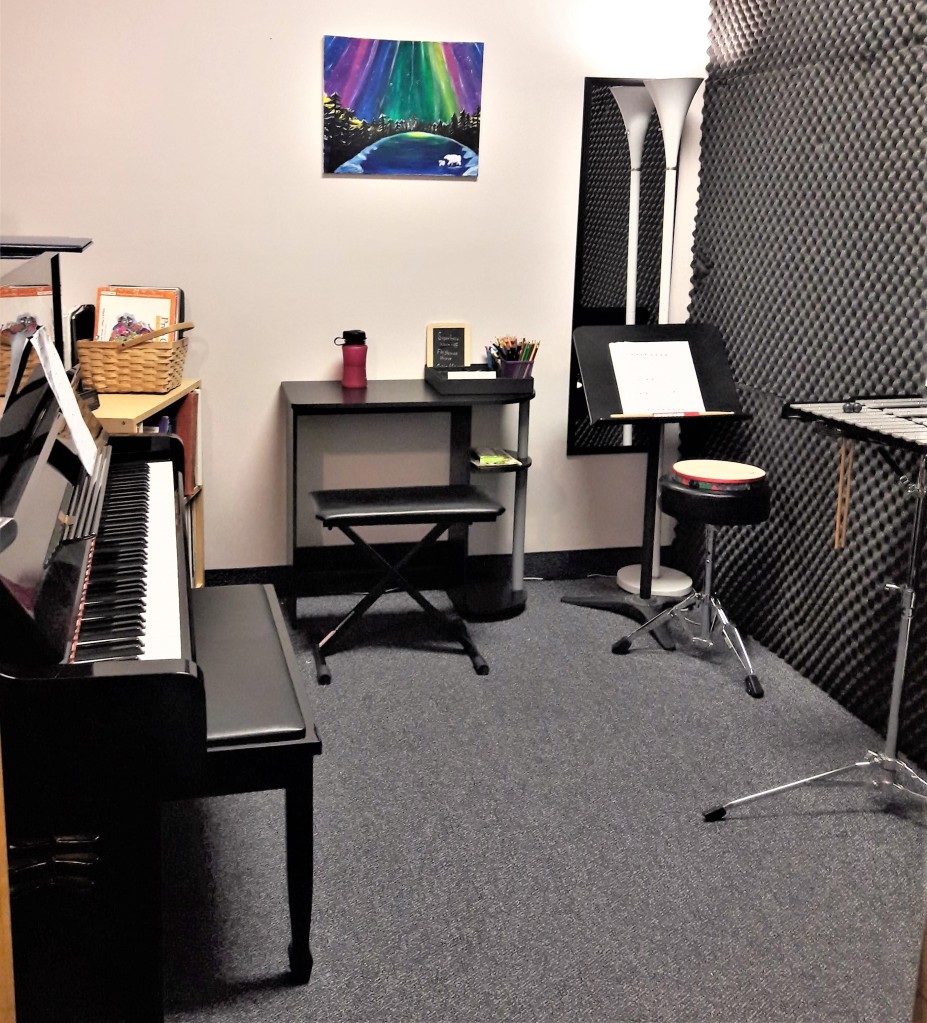
Lessons are located at Northern Pine Studios, in the Circle Pines/Lino Lakes area of Minnesota. Northern Pine was started by Rick and Mary Taube and originally offered only guitar and banjo lessons, but has expanded over the years to include piano, Suzuki guitar, violin and voice instruction. It’s a fantastic community of musicians and we would love to have you join us!
I also offer online lessons for those who live out of state.
savianostudios@gmail.com